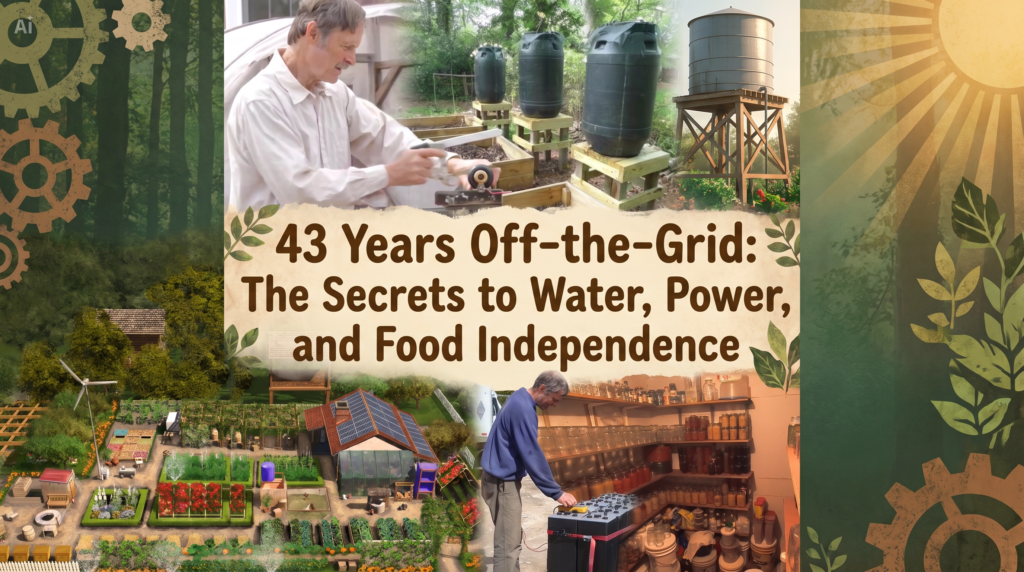
CRITICAL FIELD BRIEF: What the mainstream media won’t tell you about supply line fragility and grid dependence could leave your family exposed when crisis hits. Pay close attention to the video—press play on the brief video below to uncover the hidden infrastructure flaws and the exact off-grid workarounds you need to put in place today.
- The 1,200-Calorie Trap: Why standard commercial emergency food buckets are a dangerous illusion that leaves your family malnourished during prolonged crises.
- The “Refrigeration Illusion”: How modern food storage relies on a fragile grid—and why relying on cold storage when power fails is a critical mistake.
- The Gut-Health Hazard of MREs: Why relying on military rations for more than a few days destroys gut flora and limits essential nutrient absorption.
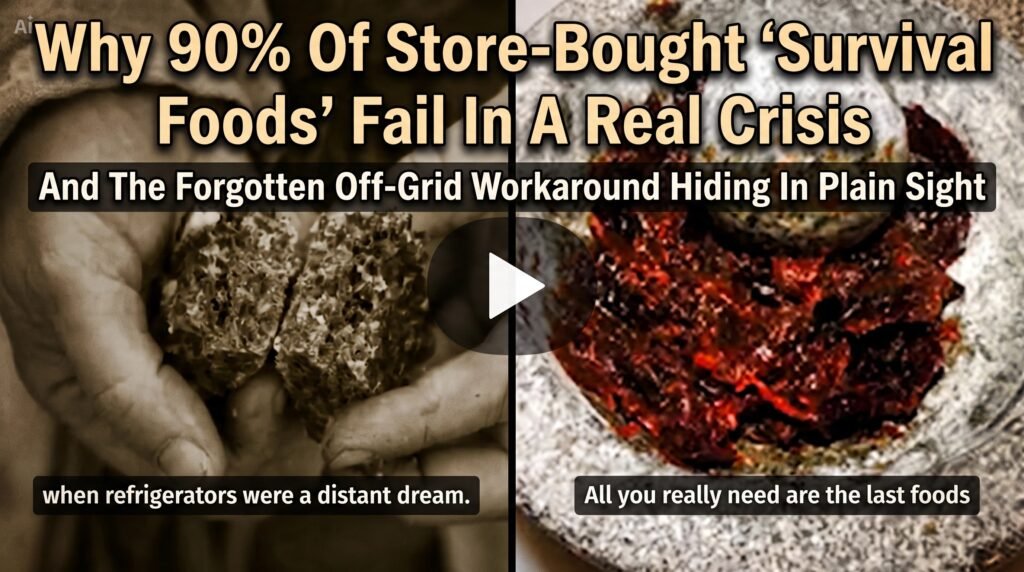
- The Forgotten “Superfood” Solution: The long-lasting, nutrient-dense food preparation method utilized by historical generations that requires zero electricity or refrigeration.
- Access the full breakdown by clicking to play the video above or clicking the button below.
Additional Resources & Background Research
Why 90% Of Store-Bought ‘Survival Foods’ Fail In A Real Crisis—And The Forgotten Off-Grid Workaround Hiding In Plain Sight
When disaster strikes, the immediate human impulse is to rely on modern infrastructure. We assume that in a widespread emergency, institutional relief will arrive, supply chains will adapt, and commercial solutions will keep our families fed.
Unfortunately, both history and global risk models tell a vastly different story.
Millions of well-meaning households attempt to hedge against uncertainty by purchasing pre-packaged, commercial “survival food buckets.” They stack bright plastic tubs in their basements, cross “food security” off their to-do list, and feel a sense of accomplishment.
However, a cold-hard risk assessment reveals a dangerous reality: up to 90% of store-bought emergency food supplies fail to deliver true security during a sustained crisis.
To understand why commercial survival kits fall short—and what actually keeps communities alive when the grid collapses—we must examine the math of nutrition, the fragility of modern logistics, and the forgotten wisdom of human history.
The Illusion of Security: The Caloric Deficit Trap
The primary flaw in most commercial survival food pails isn’t that the food tastes bad; it’s that the math behind the marketing is fundamentally misleading.
Many commercial prepper kits advertise “30 Days of Food” or “100 Servings,” leading buyers to assume they are purchasing a month of full sustainment. However, a closer look at the nutritional label reveals a stark truth: many of these buckets average only 1,200 to 1,400 calories per day per person.
┌─────────────────────────────────────────────────────────────┐
│                   THE DAILY CALORIC GAP                     │
├───────────────────────────────┬─────────────────────────────┤
│ Standard Commercial Bucket    │ ░░░░░░░░ 1,200 Calories     │
│ Survival Maintenance Baseline │ ░░░░░░░░░░░░░░ 2,200 Cal    │
│ High-Stress Crisis Baseline   │ ░░░░░░░░░░░░░░░░░░ 3,000 Cal│
└───────────────────────────────┴─────────────────────────────┘
During a genuine infrastructure failure—when you are hauling water, securing your home, or engaging in intense physical labor—the human body requires between 2,500 and 3,500 calories per day to maintain stamina and cognitive function.
Key Nutritional Flaws of Commercial Survival Buckets
- High Carbohydrates, Low Functional Fats: Cheap survival buckets are overwhelmingly padded with refined grains, sugars, and processed starch fillers. They lack the healthy fats and high-quality proteins required to prevent muscle wasting.
- The “Micro-Nutrient Deficit”: While processed meals keep starvation at bay temporarily, a complete lack of bioavailable vitamins leads to rapid lethargy, weakened immunity, and brain fog within days.
- Gut Health Vulnerability: Diets consisting entirely of dehydrated, highly processed commercial rations disrupt gut flora. In high-stress scenarios, digestive distress rapidly leads to dehydration and exhaustion.
Global Logistics & The “Just-In-Time” Supply Chain Collapse
The psychological phenomenon known as Normalcy Bias leads people to believe that tomorrow will look essentially like today. We take for granted that grocery store shelves will remain stocked. Yet, modern society operates on a Just-In-Time (JIT) supply network.
In standard conditions, supermarket distribution centers hold only 3 to 5 days of inventory.
[ Central Warehouse ] ──► [ Regional Hub ] ──► [ Local Supermarket ]
                                                      │
             In a grid failure or panic, ─────────────┘
             shelves empty in < 72 Hours.
Global risk assessments consistently demonstrate how rapidly this fragile system fractures:
- In 2020, global shipping bottlenecks and sudden localized demand exposed how quickly basic staples vanish from retail supply chains.
- Historical Conflict Zones: During the Siege of Sarajevo (1992–1996) or regional grid blackouts across Eastern Europe, centralized food distribution dissolved almost instantly.
- Natural Disaster Footprints: Following major hurricanes, localized logistics collapse within 48 hours, leaving regional populations entirely reliant on what is already inside their homes.
When localized supply chains break, you cannot buy your way out of the problem. Relying on commercial manufacturers to ship emergency supplies during an active crisis is an operational impossibility.
The Psychological Trap of “Set-and-Forget” Prepping
Why do so many people buy products that fall short in practice?
Psychologists refer to this as Action Bias combined with Outsourcing Responsibility. Purchasing a commercial bucket offers immediate emotional relief. It satisfies the urge to “do something” about an uncertain future without requiring a lifestyle change, new skills, or ongoing effort.
“True security is not a commodity you can purchase in a plastic tub; it is an offline capability you build through knowledge.”
When a real crisis hits, those who relied solely on commercial kits quickly discover three distinct points of failure:
- Water Reliance: Most commercial survival foods are freeze-dried or dehydrated, requiring gallons of clean, boiling water to prepare—a luxury that disappears the moment power lines fail or municipal water systems lose pressure.
- Digestive Distress: Switching overnight from a fresh, whole-food diet to preserved sodium-heavy powders causes severe physiological stress.
- Monotony Fatigue: Psychological collapse often occurs not from absolute starvation, but from the inability to stomach repetitive, low-nutrient food under high-stress conditions.
The Forgotten Off-Grid Workaround Hiding In Plain Sight
If store-bought buckets fail the risk assessment, how did our ancestors survive long winters, economic depressions, and grid-less centuries without commercial freeze-dryers or electricity?
They relied on decentralized, nutrient-dense preservation methods—forgotten, time-tested food preparation techniques that require zero refrigeration, zero electrical power, and virtually no specialized machinery.
Long before the invention of the modern power grid, historical cultures developed dense, shelf-stable superfoods designed for long-distance travel, harsh winters, and times of scarcity. These historical preparations solved all three flaws of modern survival food:
- They were high in healthy fats and dense protein, packing maximum calories into tiny spaces.
- They required no water or cooking fuel to consume when emergency action was required.
- They preserved natural vitamins and nutrients for years without degrading or spoiling.
These methods were lost not because they stopped working, but because the widespread adoption of home refrigeration in the 20th century made society dependent on continuous electricity.
True Security Lies in Self-Reliance
Relying on mainstream institutions or mass-produced commercial solutions during a systemic failure is a gamble with high stakes. True resilience requires shifting your mindset from buying a solution to understanding the science of self-reliance.
By exposing the flaws of commercial prepper kits and rediscovering the offline preservation methods used by past generations, you take the first real step toward securing your home against whatever tomorrow brings.