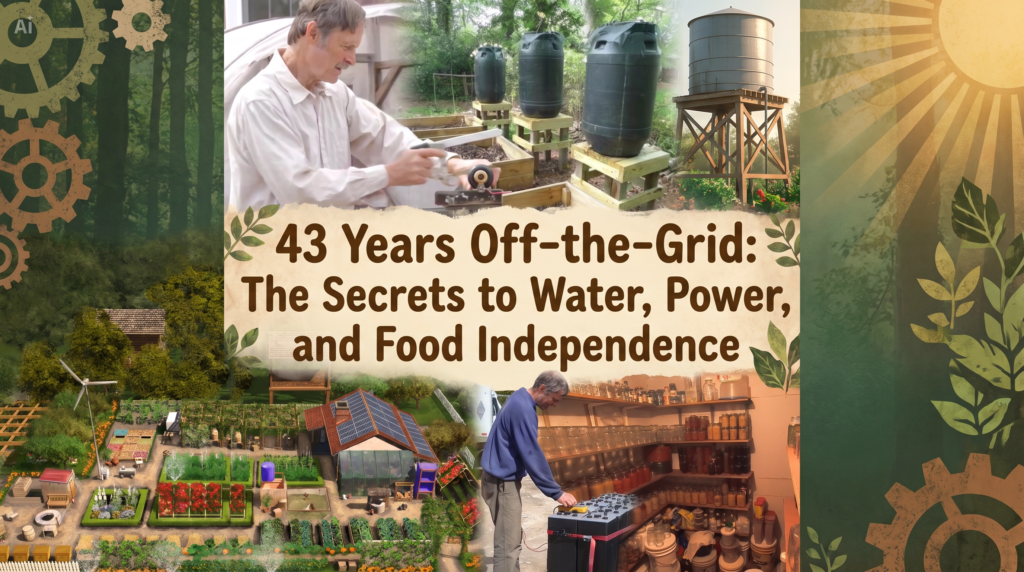
When infrastructure experiences unexpected pressure, municipal supply systems are often the first point of vulnerability. Most households maintain less than a few days of water reserves, leaving them reliant on store shelves that empty almost instantly. Developing a practical, self-sustaining water strategy is the most critical step any family can take toward true self-reliance.
- Discover how to eliminate reliance on vulnerable store-bought water supply chains.
- Learn practical methods to maintain family water security during unexpected grid disruptions.
- Gain confidence knowing your home has a reliable backup plan for daily essentials.
- Understand the core principles of off-grid living and resource independence.
- Strengthen your household emergency planning with practical, real-world solutions.
- Learn More About Self-Sustaining Water Systems
To fully understand the concepts and techniques presented, we recommend watching the complete presentation above from start to finish. If you’re short on time, you can continue below to review the essential information and discover how the system works.
Additional Resources & Background Research
The Invisible Vulnerability: Why Modern Water Security is an Illusion (And How Technology Changes the Game)
When we analyze critical infrastructure, one sobering reality consistently emerges: human civilization is never more than three days away from chaos. While modern society invests trillions in cyber defense, grid fortification, and supply chain logistics, the single most essential element of human survival—clean water—remains dangerously centralized and fragile.
Understanding why municipal supply systems fail, how historical crises unfold, and what technology can do to decentralize water access is no longer just a discipline for emergency management professionals. It is essential knowledge for anyone looking to secure their household’s future.
Global Water Vulnerability: What the Data Reveals
According to data from the United Nations and global risk assessment organizations, over 2 billion people currently live in countries experiencing high water stress. However, water insecurity is no longer confined to developing regions or arid climates.
The global municipal infrastructure in developed nations is aging rapidly, creating systemic vulnerabilities that manifest in several ways:
- Centralized Dependency: Over 80% of urban populations rely entirely on single-source municipal treatment plants powered by the main electrical grid.
- Rapid Depletion Timelines: During sudden crisis events, commercial retail bottled water supplies vanish from store shelves in under 6 hours due to panic buying and just-in-time logistics.
- Pumping Station Failure: In a widespread power outage, municipal water pressure drops significantly within 12 to 24 hours, exposing the distribution system to back-siphonage and bacterial contamination.
When the grid fails—whether due to severe weather, cyber interference, or structural degradation—the infrastructure that purifies and pumps clean water to your tap halts almost immediately.
Historical Case Studies: When the Tap Runs Dry
Risk assessment is fundamentally rooted in analyzing history. Time and again, major events demonstrate how fast civilized environments deteriorate when municipal water access is cut off.
1. The Texas Deep Freeze (2021)
When severe winter weather struck Texas, the failure of the power grid immediately cascaded into a massive water crisis. Over 14 million people were placed under boil-water notices as freezing temperatures broke pipes and treatment facilities lost power. Families found themselves melting snow or standing in long lines for bottled water in sub-zero temperatures.
2. Hurricane Maria in Puerto Rico (2017)
In the aftermath of Hurricane Maria, nearly half of the island’s population was left without access to safe drinking water for weeks. The lack of clean water led to secondary health crises, forcing residents to draw untreated water from hazardous runoff sources and contaminated rivers.
3. The Cape Town “Day Zero” Scare (2018)
Cape Town, South Africa, came within weeks of completely shutting off municipal water taps for 4 million residents due to severe drought. The situation highlighted how quickly major modern metropolitan areas can face total resource exhaustion, triggering strict rationing and military-enforced distribution centers.
In every historical instance, those who relied solely on public infrastructure faced immediate distress, while those with decentralized systems maintained stability.
The Psychology of Preparedness: Panic vs. Proactive Readiness
Behavioral psychologists studying disaster response repeatedly identify a specific pattern in human behavior: the normalcy bias. Most people subconsciously believe that because the tap has delivered clean water every day of their lives, it always will.
When a crisis ruptures that expectation, human psychology shifts rapidly through predictable phases:
- Incredulity: Expecting public authorities to restore service within hours.
- Panic: Realizing the supply is finite, leading to chaotic rushes on local stores.
- Desperation: Making high-risk decisions, such as consuming untreated or contaminated water, out of sheer physical necessity.
A hungry person can function and make rational decisions for days. A thirsty person experiences severe cognitive decline within 24 to 48 hours, leading to irrational choices. True self-reliance is about bypassing this psychological trap entirely by establishing independent systems before a failure occurs.
Decentralization: The Ultimate Survival Advantage
To mitigate the risks of infrastructure breakdown, risk analysts advocate for decentralized water production. Relying on static water storage (like pre-filled barrels) is a helpful baseline, but barrels are finite, heavy, difficult to transport, and subject to stagnation over time.
The real breakthrough in modern survival strategy lies in dynamic water generation—devices capable of extracting, harvesting, or purifying clean water independently of municipal pipelines or static storage limits.
How Next-Generation Water Technology Changes the Equation
- Zero Grid Dependency: Modern atmospheric and off-grid extraction devices operate on alternative power sources, pulling clean moisture directly from the environment.
- Continuous Supply: Instead of counting down how many gallons are left in a storage tank, dynamic water devices create a continuous supply of fresh, potable water daily.
- Elimination of Supply Chain Risk: By generating water at the point of use, households eliminate reliance on trucking, store inventories, or municipal pipe pressure.
Securing Your Household’s Baseline
In the study of survival management, water security sits at the absolute foundation of the hierarchy of needs. Without clean water, no amount of food storage, physical security, or financial preparation matters.
By shifting your mindset from passive consumption to active, decentralized production, you eliminate your home’s greatest point of failure. Investing in innovative water-generating devices is no longer just an off-grid luxury—it is the single most practical upgrade you can make to guarantee your family’s resilience in an unpredictable world.