Additional Resources & Background
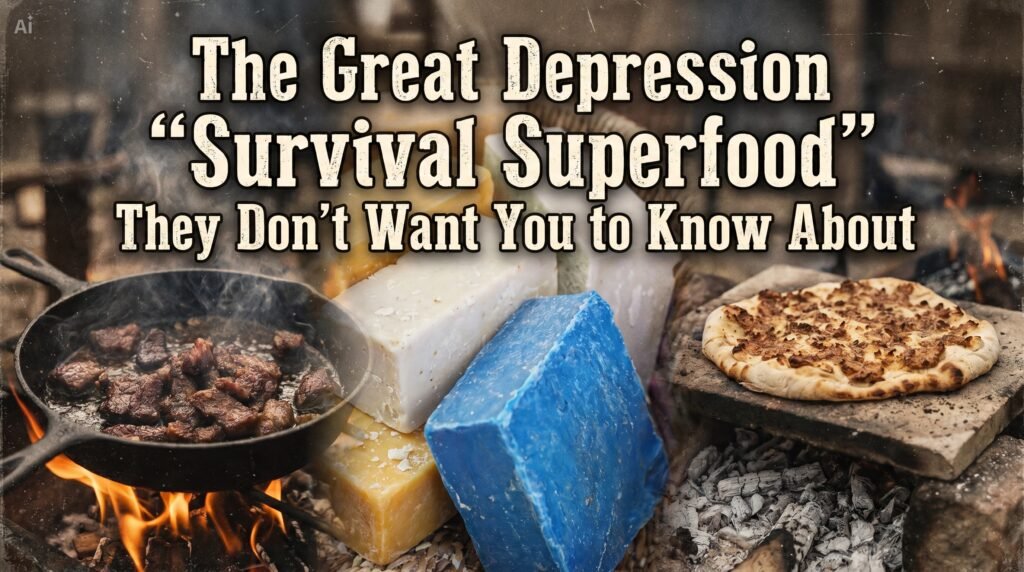
The Great Depression “Survival Superfood” They Don’t Want You to Know About
Modern society operates on a dangerous illusion: the assumption that global supply chains are unbreakable. We wander through supermarkets packed with thousands of products, rarely considering that the average city holds only a three-day supply of food at any given moment. When systemic fractures occur, the buffer between comfortable stability and absolute crisis dissolves with terrifying speed.
To truly understand risk mitigation and food security, we must look past modern convenience. We have to look back at the greatest economic collapse of the 20th century—the Great Depression—and examine the forgotten, decentralized survival strategies that kept self-reliant communities alive while global systems completely failed.
The Fragility of Global Infrastructure: A Risk Assessment
As a risk assessment analyst, looking at the data reveals that our current global food infrastructure is more centralized, and therefore more fragile, than at any point in human history.
- The “Just-in-Time” Logistics Trap: Modern distribution relies on lean inventory models. Food is moved constantly to match immediate consumer demand, entirely eliminating local storage buffers.
- Global Statistics on Vulnerability: According to reports from organizations like the United Nations Food and Agriculture Organization (FAO), over 800 million people globally face severe food insecurity annually. Strikingly, even in developed nations, a disruption lasting just 96 hours in fuel distribution or cyber-infrastructure shuts down major grocery networks entirely.
- Systemic Interdependency: Food security is no longer just about agriculture; it is deeply tethered to the stability of energy grids, digital banking systems, and international trade routes. One break in the chain paralyzes the entire ecosystem.
When the system breaks, standard modern preservation methods fail. If the power grid goes offline, refrigerators turn into boxes of rotting waste within 48 hours. True survival security requires solutions that operate completely independent of the modern grid.
Historical Case Studies: Outlasting Systems Collapse
History provides a brutal, unvarnished look at what happens when centralized economies collapse, but it also reveals the exact blueprint for survival.
1. The Great Depression (1929–1939)
During the height of the Great Depression, while industrial cities faced breadlines and widespread malnutrition, certain rural and indigenous communities managed to maintain baseline health. They relied on traditional, shelf-stable preservation methods—such as heavily fat-sealed meats, lard preservation, and ancient carbohydrate processing—that required zero electricity. These foods could sit in a dark cupboard for up to two years, remaining perfectly calorie-dense and untainted by bacteria.
2. Cultural Resilience Under Extreme Scarcity
The principles of long-term food preservation have been field-tested by history’s most resilient societies. When the Cree Tribe of Canada faced catastrophic starvation after the near-extinction of the buffalo, they relied on highly specific, multi-year stable carbohydrate formulations made from just a few common ingredients. Similarly, 14th-century Dutch communities survived long-term blockades and harsh winters by developing methods to preserve dairy products at room temperature for over 24 months.
The common denominator across these historical case studies is simple: independence from infrastructure.
The Psychology of Disaster Preparedness
Understanding survival isn’t just about analyzing food supply; it requires analyzing human behavior under duress. The psychology of crisis management typically follows a predictable, highly dangerous pattern for the untrained public.
- Normalcy Bias: The subconscious psychological refusal to plan for a disaster that has never happened before. Most citizens assume that because food has always been available, it always will be. This bias causes catastrophic delays in preparation.
- The Panic-Hoarding Phase: When a crisis becomes undeniable, the public shifts instantly from denial to blind panic. This results in the immediate stripping of commercial shelves, creating a secondary supply shock.
- The Survival Advantage: True preparedness alters your psychological baseline. Individuals who possess the knowledge and means to produce shelf-stable, sovereign food sources do not panic. They operate with cognitive clarity, allowing them to make rational risk assessments while others are paralyzed by fear.
The Ancestral Blueprint for Modern Food Sovereignty
The ultimate takeaway from historical food crises is that true security cannot be purchased at a modern commercial store. True security is built on ancestral wisdom—the specific, forgotten methods of transforming basic, easily accessible ingredients into nutrient-dense lifelines that laugh at expiration dates and grid failures.
While the mainstream narrative encourages dependency on global systems and corporate grocery giants, the real key to surviving an uncertain future lies in reclaiming the independent food secrets of the past.
Are you ready to see the data and step outside the fragile modern supply chain?