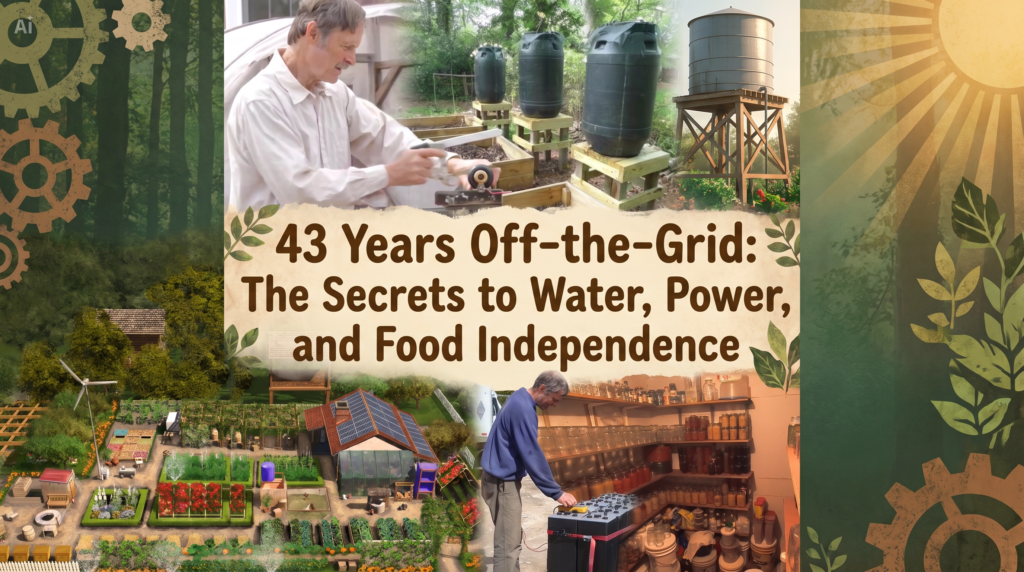
THE QUESTION CONTINUES
Water shortages can change how people think about something most households normally take for granted: access to water. The presentation you are about to watch follows the story of a farmer facing serious water challenges and his search for an alternative source. It eventually leads to a technology based on atmospheric water generation — collecting moisture from the air through condensation and then treating the collected water. The presentation’s claims and product story should be considered separately from independently verified information about drought conditions and atmospheric water technology.
WATCH THE FULL PRESENTATION
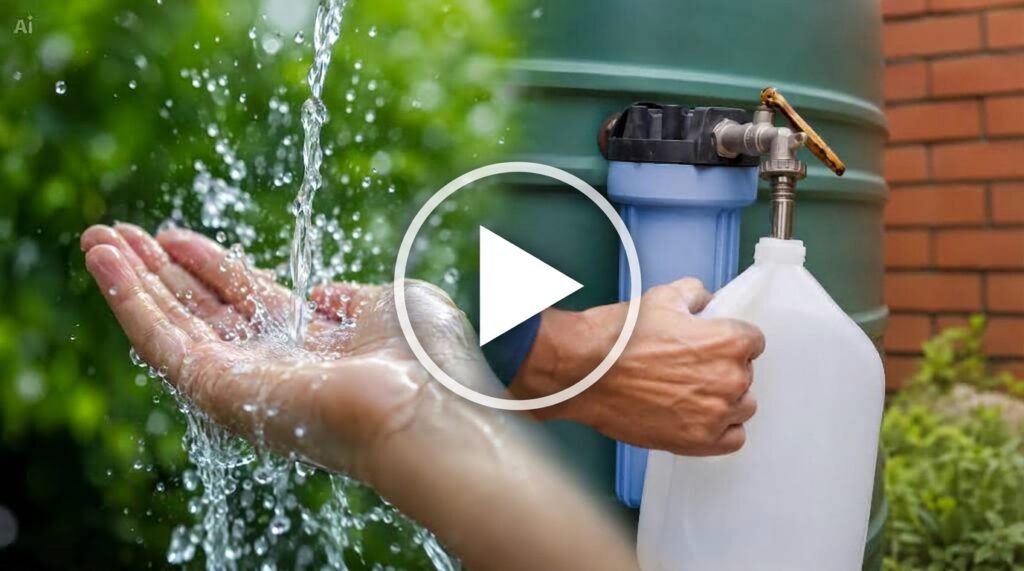
THE STORY BEHIND THE APPROACH
The presentation begins with a mystery surrounding a homeowner who appears to have access to water while people nearby are dealing with restrictions.
It then moves into Richard Wilson’s story as a California farmer and his experience with drought-related water challenges.
From there, the presentation explores alternatives such as wells, water storage and filtration before introducing atmospheric water generation.
WHAT THE PRESENTATION EXPLORES
Water shortages
- Drought
- Reservoir levels
- Groundwater
- Private wells
- Household water security
The proposed approach
- Atmospheric water generation
- Condensation
- Moisture collection
- Water filtration
- DIY system construction
The personal story
- Richard Wilson’s farming experience
- His search for an alternative water source
ADDITIONAL RESOURCES & BACKGROUND RESEARCH
Atmospheric Water Generation and Water From Air
Atmospheric water generation (AWG) is an established area of water-technology research that explores how moisture in ambient air can be collected and converted into liquid water. Different approaches include active condensation, fog harvesting, dew collection and sorption-based systems. Research reviews describe atmospheric water harvesting as a potential supplementary source of freshwater, particularly where conventional water sources are limited or unreliable.
How Atmospheric Water Generators Work
Many active atmospheric water generators use a process similar to a dehumidifier. Air is moved across a cooled surface, causing water vapor to condense into liquid water. Production depends strongly on environmental conditions, particularly temperature and relative humidity. EPA research notes that household-scale systems can have substantially different production rates depending on operating conditions, while larger systems can produce considerably more water.
This is important when evaluating claims about water production. A system’s advertised output under favorable conditions should not automatically be interpreted as the amount it will produce in every climate or season.
Energy Requirements
Producing water from atmospheric moisture is not energy-free. Condensation-based systems generally require energy to move air and operate cooling equipment, while sorption-based technologies may require energy to regenerate the water-absorbing material. Research on atmospheric water harvesting therefore evaluates both water productivity and energy efficiency when comparing different technologies.
Water Quality and Treatment
Another important consideration is that collecting water from air does not automatically guarantee potable water. EPA testing found that atmospheric condensate may have generally good chemical characteristics but can still present microbiological concerns. The agency concluded that atmospheric condensate should be adequately treated before being considered for potable use.
More recent research also highlights possible contaminants originating from the surrounding air, collection environment and materials used inside an atmospheric water system. For this reason, filtration, disinfection, storage and system maintenance are important considerations when evaluating an AWG for drinking-water applications.
Understanding the Water Freedom Presentation
For readers interested in the technology itself, the EPA’s research on atmospheric water generation and peer-reviewed reviews of atmospheric water harvesting provide useful background for understanding the opportunities, limitations, energy requirements and water-quality considerations involved.